 |
BAIANASYSTEM
O MUNDO DÁ VOLTAS (Self-published)
My favorite Brasilian band has really come of age on their latest (fifth apparently) album, O Mundo dá Voltas, which means "the World keeps Turning" in English. It is beautifully arranged and sequenced and shows great poise and maturity in its delivery. I don't even object to the rap numbers which usually make me skip ahead on contemporary albums. This time ("Magnata/Tycoon") it is followed by a lovely acoustic duet between guitar and cavaquinho ("Palheiro/Haystack"). There is an evocative "making of" video, mostly in black and white. But the video is marred by too many overlays: sonic pulse bars run up and down the outer edges, there are blurry titles all over the image in orange script, and along the bottom, logos, plus the date MMXXV and more anchor text as well as the lyrics, which might be useful if you really understood Portuguese, but printed in a large hideous blackletter script in yellow! It's a noisy graphic mess. After half watching it a couple of times, I was able to download the album and can listen to it undistracted. Their "classic" layered Baiana sound: bright guitar lead with horns in counterpoint, a battery of surdo drums with echo, emerges on the third track "Praia do futuro" (a beach in Fortaleza)", which has guest vocals from Seu Jorge. A reggae-flavored number "Porta-Retrato da familia Brasileira" returns to constant themes: the hardship of the average family. I transcribed and translated some of the lyrics:
A primavera chegou / Spring has arrived
Améfrica, Améfrica / Améfrica, Améfrica
Ladina Améfrica / Ladina Améfrica
na minha casa e malê / in my house and malê
eu continuo na fé / I continue in faith
eu vou fazendo fazer / I'm doing it
Rimando contra a mare / Rhyming against the tide
Quilombola Quilombo / Quilombola Quilombo
Explanation: There was a major slave revolt in Salvador da Bahia in 1835. The leaders were muslims who were known as malê, the Yoruba word for muslim. (In 2000 the bloco I hung out with in the bairro de Itapuã was called Malê Debalê.) Améfrica is a made-up word to signify Africans in America, this is reinforced by "Ladina" (Ladinos are mestizos in Central America, as well as a name for blacks in medieval Spain); Quilombo comes from the Kimbundu word meaning war camp and refers to hidden camps in the bush created by runaway slaves, who were called maroons in Jamaica or Carabalí in Cuba and Puerto Rico. Arsenio Rodriguez's first hit "Bruca maniguá" begins "Yo soy Carabalí, negro de nación. Sin la libertad, no puedo vivir."
The Bahian elder statesman, Gilberto Gil, shows up to sing "Pote d'água (Bring water)." The layers of berimbau with the Orquestra Afrosinfônica are lovely. The complex arrangements also have swelling brass and the majestic outtro of the title track, "O Munda dá voltas" would make Gil Evans proud. Despite a brief rap interlude, I dig "Bicho solto" (I am going crazy) or literally "loose creature," which demonstrates the barely contained restraint on the verge of explosion that is so characteristic of life in Bahia, especially around carnaval. In fact the album is redolent of Salvador da Bahia and very evocative of the moods of the city. This is outstanding and definitely one to play on repeat. |
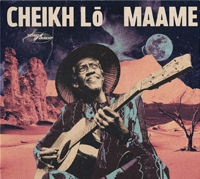 |
Cheikh Lô is now one of the elder statesmen of Senegalese music. He grew up in Burkina Faso where he made his debut with Volta Jazz, backing the singer Tidiane Coulibaly on drums and backing vocals. He saw the rise and fall of salsa and mbalax yet his music retains elements of both in a sweet blend. Growing up he listened to Rochereau and Bembeya Jazz records that his elder brother had. His new album was recorded in Senegal and for the occasion a group of Czech musicians he had met on tour flew in to jam; I think that's them on "Ndiguel Dieufe." There are a dozen brief songs going from lyrical to rocking with a variety of atmospheres, as if he was moving from room to room. "Bamba moofi djouli guedy" reprises "Bamba guedj," one of his devotional songs. His spiritual Baye Fall identity is crucial to his image, as he comes across as humble and modest, yet he is massively talented, playing guitar and singing, and he also takes an astonishing turn on the timbales. While that is an unusual instrument in Africa, it had its place in the Afro-Cuban bands that were big in his childhood, and there is a strong Afro-Cuban feeling to the opener "Baba Moussa BP120." It's a tribute to Baba Moussa which he wrote in 1976 in homage to a policeman who kept order in Bobo Dioulasso when he was growing up. The other songs favor the talking drum, played by Souleymane Seck. Other traditional instrumentalists include Abdoulaye Cissokho on kora and Vieux Keita on balafon, and Lô himself on congas, trap drums and timbales. Another oldster, Vieux Mac Faye, plays guitar, and Thierno Koita (ex-Le Sahel, Baobab) is featured on sax. Four pianists are listed and six bass players. Though Lô's voice is fragile (at times I am reminded of late Gregory Isaacs), the recording is engineered around it, so you sense the discrete placement of the balafon, percussion and sax on reverb in numbers like "Carte d'Identité." He tries on a bit of English, but mainly sings in French (& is that Japanese on "Ndeketeyoo"?). A full-on reggae number "African development" is a call to Africans for self-determination and their leaders to shed their inferiority complex. It is followed by a deconstructed reggae beat on "Ndeketeyoo." The back beat is on congas. This is Lô's first album in a decade and is wonderfully crafted.
|
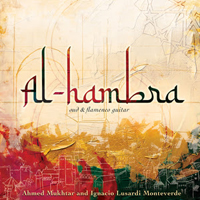 |
AHMED MUKHTAR & IGNACIO LUSARDI MONTEVERDE
AL-HAMBRA: A Musical Dialogue Between Oud and Flamenco Guitar (ARC Music EUCD2972)
Ahmed Mukhtar from Baghdad on oud and Argentinian Ignacio Lusardi Monteverde on flamenco guitar make a logical connection between the related musical traditions of their two cultures. Mukhtar founded the Taqasim Music School, whereas Monteverde won the Latin musician of the year award in the UK. The compositions spark back and forth between the two, in an intricate and subtle exchange. Mukhtar is the author of Arabic Music and the Oud and the Mukhtar Method series, for learning the oud, darbuka and Arabic music theory. His partnership with Monteverde began in London in 2017. This album reflects their shared vision. Mukhtar says, "Since some oud techniques were challenging on the guitar and vice versa, I carefully composed with both instruments in mind. Even in my taqasim (improvised sections), which are deeply rooted in the Arab oud tradition, I aimed to draw the guitar into this musical language." They have performed together in Bahrain, India and Iraq, building a strong musical bond. With Al-hambra they bridge time and traditions fluidly. The oud came first of course but the Spanish guitar of Andalusia took the music into another realm. They share melodic structures such as maqãm and scales of flamenco, drawing on a range of influences, from Latin America and classical Arabic modes. "Baghdadi girl," "Iraqi Merengue," the ballad "Quietness" and "A Moment of Taqasim" stand out, but the surprise is the appearance of Rimsky-Korsakov's "Young Prince and the Young Princess" which is a brilliant choice to close and showcase the "oriental" aspect of a lot of Western music. The title track, "Al-hambra," pays tribute to the masterpiece of architecture that shows the foundational solidity of Islamic culture in the Iberian peninsula.
|
|
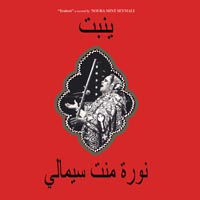
NOURA MINT SEYMALI
YENBETT (Glitterbeat)
For about a dozen years now Noura Mint Seymali has been known internationally as a fantastic griot singer from Nouakchott, the capital city of Mauritania which sits on a high plateau overlooking the Atlantic coast of West Africa. Seymali may have remained in obscurity but for an enterprising American producer named Matthew Tinari who sought her out and recorded her a dozen years ago. In addition he booked her on global tours and the resulting collaboration with her, and her guitar-playing husband, has made her a chart topper in the larger world of "world music". Tinari is not only a fine producer, knowing when to turn on the Echoplex, but he also plays drums with an intensity that might remind you of John Bonham or his African equivalents. But the key instrument here is the electric guitar played by Jeich Ould Chighaly which rocks relentlessly. Seymali also plays ardine (a type of harp), while her husband doubles on tidinit (a stringed instrument similar to an ngoni) and there is Ousmane Touré on electric bass. Despite the thundering power trio backing her, Seymali manages to be heard above the massed instruments. Noura Mint Seymali is the step-daughter of Dimi Mint Abba and carries on the fine tradition of the great griot or praise-singers from West Africa. Her modernization of traditional music has also been appreciated in her homeland. Call it psychedelic rock or Saharan funk, it is unique and beyond anything normally called sub-Saharan blues or categorized in such fashion. Her previous two albums graced my top tens in their years of release and her continued dominance as a musical force is assured with this powerful set.
|
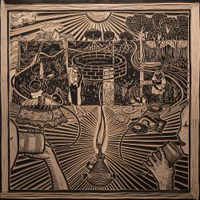 |
LENINE
EITA (Casa 9)
I am sure I've said this before, but if Lenine was singing in English he would be considered one of our great songwriters like Paul Simon, Randy Newman or Carol King. This is a welcome return to music by him after a decade, even if he is lumped into the MPB category (which he rejects saying he plays a different kind: Musica Planetaria Brasileira). He presented the songs as a suite of video singles, cleverly blended together, with tributes to his parents and friends, as well as forerunners like Nana Vasconcelos & Hermeto Pascoal who are touchstones for him. Another Northeasterner, Maria Bethania also appears on "Family Photos"; each song has a different dedicatee and a different musical approach. I was quite distracted by the slick video of this album, so I had not paid close attention to the music and songs until I downloaded it. Lenine has well established themes, musical styles he leans on, which is good, and the arrangements are perfect. The opener "Confie en mim," references his 1999 hit "Paciencia." We have all become so selfish, there is no more empathy, he points out. So this loss of trust is one of the themes. I love the way he is attuned to everyday sounds and ambient noise: nature, birdsong, thunder and rain, simple acoustic guitar, a needle dropping on a record. Apparently he went into a long depression when Covid hit and felt he had nothing more to say. His son Bruno Giorgi snapped him out of it, which is welcome for those of us who adore him. Bruno also did the arrangements for the new album. Without understanding it fully, I get the feeling he has been paying attention to street poetry, livros do cordel, which is dying out in Brasil, but still clinging to life in the Northeast where he is from. But some of the lyrics ("Malassombro") and the cover which is a simple linocut, suggest this. The last number of the brief half-hour long album, "Motivo," also features accordeon which brings us back to his Pernambucan roots. |
 |
For two decades Novalima have been recording, touring and sophisticating their unique style, a blend of Afro-Peruvian rhythms with modern urban electronica and dub. Traditional Afro-Peruvian music was unknown until relatively recently and the work of Perú Negro and Susana Baca, featured on The Soul of Black Peru (Luaka Bop, 1995). For their new album Novalima have added new material to tracks from their last two EPs which came out on Six Degrees. While the arrival of Spanish conquistadores in Peru is well documented, histories don't mention the black slaves brought there, perhaps because greater numbers were brought to Brasil and other countries in Latin America. Fewer Africans were brought to Peru, until the Spaniards established plantations and then imported them from Cuba, Colombia and Hispaniola. Today black Peruvians still number less than 5% of the population. Probably more is known about the origins of house music, though again I remain in the dark. There is a good balance of tradition with innovation here: the electronica allows them space to suspend the rhythms and use them subtly, instead of in a barrage. Small hand drums and the buzzing jawbone of an ass are framed with pulses and sitar-like drones that create an effective wash of sound. The use of echo and loops also sets up a dramatic dialogue with the earnest vocals, which are clear and reinforced with sweet harmonies, even when the backing is more like guitars on buzz saw setting. I sense an expansive South American mood here as it reminds me of Colombian music in places including cumbia rhythms. The lush backing often has an eerie soundtrack quality weaving complex moods around the different vocalists. There are eight guest artists, though maybe some are DJs rather than singers. The collective started out file-sharing on different continents (London, Barcelona, Hong Kong, Lima) and working up their material remotely, but now they do it live at major world festivals, and their last outing got a Grammy nod as best alternative album. I cracked up at "Canta del Agua" because the guitar lick is "Stayin Alive" by the Bee Gees. They end with a gratuitous Bob Marley cover, "Exodus," which is the only weak spot on the album, though it probably gets the crowd sweating & heaving in concert. |
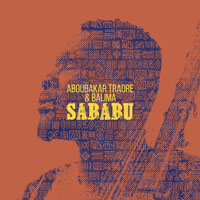 |
ABOUBACAR TRAORE & BALIMA
SABABU (Zephyrus Records)
This comes out of the gates like a bunch of thoroughbreds bent on winning the Grand National. Aboubacar Traoré sings and plays kamélé ngoni; the other members of Balima (who all sing backing vocals) are Guillaume Codutti on percussion, Zonata Dembélé on bass, Geoffrey Desmet on balafon and djembe and Désiré Soméon on guitar. I hear some studio effects on there too, sweetening the mix which is already very powerful. This is a solid, rocking album. The songs are socially aware: in "Gnani," Traoré asks how we can escape from poverty? The Europeans and Americans have fiscal sway over the CFA and extract the rich resources of Africa, such as gold, uranium and coltan, while Africans perish trying to cross the Mediterranean to escape their plight. The energy might remind you of BKO or Zani Diabaté, and it has that "well-worked-up in concert" feeling to it. Mariam Dioubate joins in as lead singer on the epic "Turamagan" about a 13th-century Mandingo warrior chief. This track, despite the implicit traditional origin, has a reggae feeling to it with one-drop trap drums and the balafon continuo chunking like a clavinet. We go back to the sound of pure ngoni blasting out of the speakers on "Djuru kan" as Aboubacar shows off his chops. The melody, he says, evokes the nightlife of Sector 22 in his beloved Bobo-Dioulasso, the economic hub of Burkina Faso. The ensemble return for "Tulon," which celebrates everything: baptisms, weddings, departures, even funerals where song and dance are at the heart of the event. The dancing quality of the balafon and guitar underscore this as we end this too brief trip, still galloping.
|
|
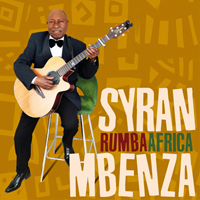
I don't know who else, among Congolese artists, is still making music at this level. Syran Mbenza has a great pedigree as a guitarist and played alongside many of the greats, including Sam Mangwana's African All-Stars and Les Quatre Etoiles (in both of which bands he partnered with Bopol Mansiamina), but he has also changed styles, going from supercharged soukous to unplugged with Kékélé, and now he casts a retrospective glance over the whole recorded history of Congolese music. And in this album he does it beautifully. The first half consists of his own compositions; the second half are choice tunes reaching back to Ngoma 78s and picking rare gems from Camille Feruzi or Tino Baroza, or digging into the hits of Franco and OK Jazz from the Editions Populaires era. Two of the singers here were in OK Jazz: Malage de Lugendo and Wuta Mayi. Ballou Canta from Soukous Stars is present along with old friend Nyboma, whose heritage is equally impressive. He is considered one of the finest singers ever to come out of Central Africa. Syran, of course, is a superlative guitarist and has increasingly identified with the Franco sound: the two-fingered lead attack and compositions in the Rumba Odemba style. In fact his composition here, "Rumba o Demba," sung by Wuta Mayi is very much in the laid-back OK Jazz ballad style, and features Camerounian Jimmy Mvondo on sax. Syran has been perfecting this sound since his tribute to Luambo album, Immortal Franco (2009), if not earlier. The high tenor of Nyboma sings forth on his own song "Pepe," a tribute to his former bandmate Pepe Kalle. They started out together as young pups in the Verckys stable with the Soki brothers in Bella Bella. Reaching further back we hear the tune "Siluvangi" by Camille Feruzi (praising a Kinshasa bar), performed by Viviane Arnoux on accordeon who moved from the clody musette to maringa style seamlessly. For a few decades she was a stalwart member of Papa Noel's band and also toured with Sam Mangwana. Franco, in fact, revived the old-timer Feruzi's career because he remembered his dad enjoyed listening to the accordéon and it fit with Mobutu's image of "authenticité"; so he invited him to reprise a couple of his numbers on an early OK Jazz album. For balance we get a classic African Jazz number, "Germaine": a full-on Latin groove with Malage de Lugendo and Wuta Mayi sharing lead vocals. There's a video of the original on youtube and the sonic difference is marked, but in terms of the arrangement, the new version soars in richness and complexity, like this bottle of Old Vine Zinfandel I just uncorked! The album ends with an elegant bolero, "Lola," originally sung by Kwamy with OK Jazz and now given a lush arrangement and sparkling guitar by Mbenza. He has a reliable circle of friends, sadly the fourth star, Bopol Mansiamina is no longer alive, but with Wuta Mayi and Nyboma and his rhythm section he is well grounded.
|
 |
ORQUESTA AKOKAN
CARACOLES (Daptone)
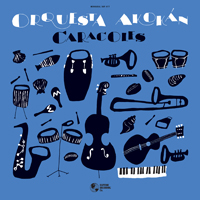
For half a century, Cuba has been restrained from evolving into its place as a cultural leader, as one of the historically richest countries in the Caribbean. This is largely due to the hatred of North America and wont change under the current petty and vengeful regime. Since the revolution there have been chronic shortages of foreign exchange and an increasing nostalgia for the old times — not the crushing poverty pre-Revolution but the days of the big bands of Beny Moré, the Mambo, rum and the thunder of Changó. The Haitians feel a similar nostalgia for the days of Papa Doc: at least then you knew who the enemy was — the state! For the Cubans it is undoubtedly the Yankee imperialist dogs. But amidst the nostalgic backward-glancing, the reverence for the old music bears fruit, first with the Buena Vista Social Club and now with Orquesta Akokán who capture, wonderfully, the sounds of the lush casino orchestras like Conjunto Casino, Casino de la Playa, Arcaño, and even the bands that were big in America, such as Desi Arnaz, and the great Machito who brought swing to the Palladium in New York, or Perez Prado in Mexico. The band's name is a Yoruba word meaning "from the heart," and this their third heartfelt album is as rich and warming as the predecessors. From traditional rumba underpinning the percussion to deep roots in the hidden Yoruba culture of Cuba where you sense the guidance of Eleguá (trickster God of the crossroads), Akokán mine a rich vein of Latin Jazz. |
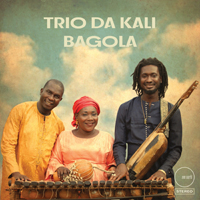 |
This is a spare but intricate album by a supergroup comprising a trio of top-flight musicians. First we have a balafon played by Lassana Diabaté whose virtuosity prompted him to the spotlight with Toumani Diabaté's Symmetric Orchestra and the group Afrocubism. The other instrument is the bass ngoni, played by Madou Kouyaté, son of Bassekou Kouyaté and member of his family band Ngoni Ba. Fronting the band is the sweet vocalist Hawa Kasse Mady Diabaté, daughter of the late Kasse Mady Diabaté, a renowned African star who started out in National Badema and went on to fame as a solo artist, winning a Grammy along the way. His daughter also has a powerful voice and the three griots together create an assured and powerful front, which is surprising since you would expect to hear percussion, another ngoni or guitar added in to the sound. But it is perfect as is and Madou's resonant vocals add nice harmonic balance to Hawa's voice. Some of the tunes and lyrics sound familiar though none of the tunes has a writing credit. They have performed with Kronos Quartet and Derek Gripper. This lovely Mandingue music from Mali and Guinée is one of the enduring legacies of world culture. |
 |
It's been seven years since Ammar 808 first hit us with his rumbling synth-driven abandoned wildness. The big bad North-African beats are back with the sonic overlay of traditional vocals and instruments. We get a wild bagpipe-like skirl over his grumbling bass synth and relentless beats on this, the Tunisian's third album featuring his TR-808 drum machine. The bagpipes are called mezoued are are indigenous to Tunisia, though any Scot (or Bulgarian) would be proud own them. But such tribal sounds were long banned in Tunis, being considered primitive, unsophisticated music from the dark side of town: the goat obviously tainted with the association to the god Pan in pre-Muslim and Christian societies. Since we get our word Panic from him — we should add pandemonium too — there is an appropriate untamed quality verging on the mystical (especially when you play it loud and damn the neighbors). But, for balance, there are elements of sufi hymns added to the ancient folksongs and the fezzani rhythm, a kicking, off-tempo beat with a tambourine, hand drums and clapping. You soon forget the drum machine. In fact he emphasizes the hand-played instruments against the eternal loops of the electronic ones to set up a distinctive counterpoint. Then there's my other favorite North African instrument, the reedy ney adding to the sonic soup. There are three singers, from different traditions, however they blend perfectly. The traditional "Aman Aman" even adds auto-tune to the vocals for a bizarre twist, it sounds a bit like the muezzin from a cheap cassette heard while you are trying to sleep at 4 a.m. in a frigid camper van in the desert. It is cinematic and eerie and a new take on a lovelorn ballad. This is one for the dancefloor and late nights when the dancers' shadows take on a life of their own.
|
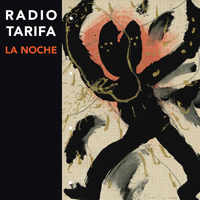 |
Radio Tarifa's fifth album comes after a two decade hiatus. Back in 1985 a trio met in Madrid and had a great idea: imagine a radio drifting between signals in the South of Spain, picking up Andalusian and Arabic music. Two of the trio were into performing medieval Spanish music which already had that fusion in its bones; the arrival of Benjamin Escoriza from Granada brought it into the 20th century with rock guitars and studio effects. They were nominated for a Latin grammy for Fiebre and toured the world to great acclaim. Benjamin's poetry brought it to life vividly, but sadly he died 20 years ago and the group disbanded. Now they have reformed and even have an unfinished piece by Escoriza to kick it off beautifully, making a continuity to their earlier sound. It's folkloric and medieval with major flamenco and arab flute elements, just like the earlier discs. I'm not big on medieval music but "Quel sol che raggia" reminded me of the Coventry carol "Lullay lullay." I guess it's the flatted harmonies. Faín Dueñas is the leader, playing guitar, bass, percussion, organ, guimbri, handclaps and even koto. Vincent Molino adds the woodwinds: ney, arghoul, bawu, cromorne, oboe and keyboards. Guests bring violins, accordion, cello, bass. I think I hear harp on "Sakura," a Japanese folk song, though it's not credited, so maybe that's Dueñas on the koto, playing with his thumbs instead of plectrums* (*I know the plural is plectra, but since we say stadiums and not stadia, I will assume it's Anglicized). Escoriza had one of those great deadpan flamenco voices and they capture that again, especially with the guest vocalist Jose González on "Sabah" and Javier Castrillón on "Soleà del desamor," which also features a really plankety banjo. Welcome back!
|
 |
KWASHIBU AREA BAND
LOVE WARRIOR'S ANTHEM (Soundway)
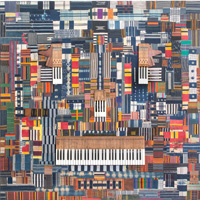
Kwashibu Area Band from Accra, Ghana are the former backing band for Pat Thomas. Introspective, rootsy, this great disc has a mellow mood and seems to have adapted some dubby sensibilities to generate a spacey sound, very unlike most highlife. In fact the title track sounds more like Jamaican jazz, and I bet people in a blindfold test would guess it was Count Ossie or Monty Alexander. The leader, Kwame Yeboah, plays Hammond organ and there's a big sound from the saxophone player Ben Abarbanel-Wolff (on Stereo chorus?). The other members of the quartet are Giuseppe Coppola and Eric Owusu on percussion (congas, drums). Ben Abarbanel-Wolff toured with Ebo Taylor's band (and was also driver on their US tour!); Giuseppe Coppola, from a glance at his Instagram, appears to be a German reggae drummer. Kwame Yeboah is the son of Highlife musician A. K. Yeboah. In his teens he moved to Denmark and took workshops with Michel Camilo and Danilo Pérez. He then moved to London where he played with many musicians in all genres (from Stevie Wonder to Tom Jones, and from Ken Boothe to Shaggy). He also maintains a recording studio in Ghana so is perfectly positioned to lead such a dynamic group. I listened to their 2015 album backing Pat Thomas and it is straightforward classic highlife; there is no indication of anything not in that style, nothing you might call subversive in the solos. The new direction of Kwashibu Area Band does have some hints of highlife, such as the opening cut "Mpaebo Mu Asomdwee" which sounds like a half speed dub version of traditional Ghanaian music. But the disc fits more into the categories of jazz and dub. |
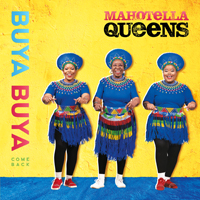 |
MAHOTELLA QUEENS
BUYA BUYA: COME BACK (Umsakazo Records)
It's hard to believe that it has been 20 years since we last heard from the Mahotella Queens. After Simon Mahlathini died they still toured, and I recall seeing them (seated for once) at the vast Zellerbach Hall in Berkeley, where I still managed to get backstage and have them autograph the concert poster [right]. I think they were a little surprised that white fans knew them individually by their names, but Hilda, Mildred and (at the time) Nobesuthu were very strong distinct personalities. Their return is marked by two newcomers: Amanda Nkosi on alto vocals (I wonder if she is related to West Nkosi their former pennywhistle player and arranger?) and Nonku Maseko, another familiar-sounding name. They recently toured Japan and made a huge splash but I have not seen any other concert dates announced for this new album. Their original band, the Makgona Tshole Band, have also gone to their reward, but the new recruits (especially the bass players) sound equally as ferocious in performance, and Nick Lotay, on lead guitar, sounds like Marks Mankwane. Their "indestructible beat", as it is so rightly called, pounds out from the speakers, urging you to shake your bones. "Jump to the music," appropriately, is the opener. This is followed by the title track, a song written by Hilda in 1966 and a hit which sold well on 78 rpm shellac discs. What is incredible is Hilda is now 83! She was a founding member of the group in 1964. What changes she has seen in her homeland as well as the world passing by as she whizzes around it! This is an even more incredible transformation than the world that say Martha & the Vandellas or the Ronettes witnessed, to name two of their contemporaries. The high-energy rave up of "Show me the way" returns to the familiar sound of their peak in the 90s when they toured endlessly and blew away crowds from Swaziland to San Francisco. I think their first world tour was in 1987. Nobesuthu has retired but showed up to sing a wedding song, with lively accordion (Lotay's keyboard?), "Phephezela." Hilda adds some growling reminiscent of Mahlathini, to invoke his presence. They reach back to the 60s again for a song that was a popular singsong in shebeens, "Thoko, ujola nobvani?" It teases a girl about her latest beau, and led to a series of follow-up answer songs. Again Nick Lotay seems to be channeling the classic gods of mbaqanga guitar. The lyrics are often amusing but sometimes describe the harsh realities of township life: betrayed trust, out of touch elderly relations, loose women. But in the end there is still a lot to celebrate. | 
|
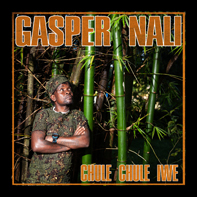 |
GASPER NALI
CHULE CHULE IWE (Spare Dog)
Well here is something you have probably never heard before: a babatoni! That is a one-string bass with a three-meter-long neck and a resonator covered in cowhide. Nali plays it with a stick and a bottle and the result is very compelling. He is from Malawi so there is the rural feel as well as hints of Kwela, Jit and Jive. An old video of his song "A Bale Ndikuwuzeni" received more than 18 million views on Youtube, according to Spare Dog Records, his label, which has been issuing his music since 2018. The title of his third album translates to "Hey, you, frog," adapted from a nursery rhyme, which suits the childish and playful mood. He has a foot pedal to give a kick to a cowhide bass drum as he is playing and singing. I think he has ankle-rattles too, and I also hear what sounds like a lead guitar, certainly more than one-string is audible. Yes, okay, he has a Swedish producer, Mattias Stålnacke, on guitars, keyboard and studio effects. It's charming and bounces along very pleasantly.
|
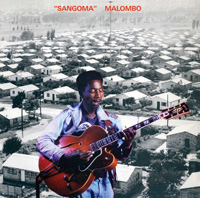 |
Forty years ago the popular african music label of Germany put out a series of LPs that was supposed to present the musical variety of Africa in a carefully curated album of each regional style. While that was a mad idea, it did bring us phenomenal discs by Youssou Ndour, Sam Mangwana and Philip Tabane, among many others. The Tabane album, called Man Phily was drawn from four previously issued LPs by the South African jazz group Malombo. There was also a bonus live track, "Ke Kgale," to close out the album, which quickly became one of my favorites. In 1988 Kilima Records, based in the UK, issued another compilation disc, including the gem "Hi Congo" again, and also giving us the studio version of "Ke Kgale," the great cut "Sangoma," title of the present disc, and another monster track "Phampha Madiba." So it was a great delight to discover Matsuli Music have reissued the classic Sangoma album in its entirety. Though the group continued without him when he retired from touring, it was with a different sound: Tabane was the vital spark and wrote and sang all the songs. Also there is a continuity to this one album that makes it essential to hear all ten tracks straight through, as a suite.
The title means "Spiritual Healer" and that gives you a sense of the musicians' intentions. In the mid-70s Tababe moved to the USA and played alongside some giants of jazz, like Herbie Hancock, Miles Davis and Pharoah Sanders at the Newport Jazz Festival. Returning to South Africa in 1978 he got a record deal with Warner-Electra-Atlantic and expanded the band to add more percussion and a separate flautist, so he could concentrate on guitar and vocals. Their name Malombo, refers to ancestral spirits, but these are not passive ghosts, they are kick-ass spirits. They create a framework for improvisation which is very loose yet honed to an edge by superb musicianship and the give and take of many rehearsals and performances. |
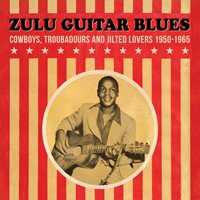 |
ZULU GUITAR BLUES
COWBOYS, TROUBADOURS & JILTED LOVERS 1950-65 (Matsuli Music MM130)
South Africa has the largest economy in Africa, but as you know it was built on slave labor. 130 years ago there was a struggle for control known as the Boer War between British and Dutch settlers; one outcome was the creation of the Boy Scouts by Robert Baden-Powell who defended the town in the Siege of Mafeking. Then there were native insurrections which we remember from films like "Zulu." Minority white control, which lasted for a century, made the natives essentially aliens in their own country: they were forced to labor in mines and relocated to shanty towns. Elon Musk's father was a fascist who found a perfect home in the racist country where he grew wealthy with emerald mining rights. There were a few sympathetic whites, Hugh Tracey for one, who travelled around recording native music for Gallo & other labels (no one understood why a white farmer was interested in his workers' songs), but many other commercial companies found markets for 78 rpm shellacs among the miners. As in other parts of Africa in the 1950s, the indigenous people saw cowboy movies and adapted the music they heard to their mbaqanga beat, creating a new hybrid, distinct from the jazz-inspired music in the cities. And, as in Congo, a whole subculture developed with its own patois (in Kinshasa it was called Hindubill) and of course appropriate costumes. Matsuli's Chris Albertyn has been collecting African recordings and has followed in the footsteps of Tracey in promoting obscure black musicians. One of them is so obscure he is called "Blind man with his guitar" and his piece "Isoka Labaleka" is outstanding, with counterpoint and brilliant harmonics reminiscent of Jean Bosco Mwenda. For this compilation Matsuli also drew on the collection of Siemon Allen of the Flatinternational Archive. There's Hawaiian-style slide guitar, hints of Jimmy Rogers, and many outstanding performers with names like Cowboy Superman and Cowboy Sweethearts. The lyrics are translated: the Play Singer is a trickster, he sings "Leave your burden behind and come to the city," but in the next verse he sings, "those headed for the city carry a heavy burden"! The brutality of life is a constant theme of the songs; the grumbling became so prevalent that many songs ended up being censored and this led to an increase in instrumental music in the next generation. The richness here opens a treasury like the discovery of great forgotten American blues artists such as Geeshie Wiley. The music is beautifully restored and packaged to the high standards familiar from Matsuli's catalog. The LP release has 18 tracks; if you buy the download you will get seven bonus tracks. |
 |
EDNA MARTINEZ PRESENTS PICO!
SOUND SYSTEM CULTURE FROM THE COLOMBIAN CARIBBEAN (Strut 218CD)
In sixteen well-chosen tracks full of surprises, Edna Martinez shows us what a great DJ is capable of: she welcomes us with some folkloric singing and drumming and then takes us on a whirlwind ride through the music that enchants those tropical dancefloor grinders who straddle America, having one foot in the Atlantic and the other in the Pacific. Her stopping off places — Kenya, Congo, Nigeria — are familiar, as are the artists even: from Peacocks International Highlife Band to Zaiko Langa Langa, but she mixes it up brilliantly and periodically comes home to ground it with a well-placed cumbia or the champeta number "Puxa Odette" by Conjunto Ana N'gola. Since their name suggests they are Angolan, there is some deft tricksterism in her choices. The liner notes explain that champeta is a blend of mbaqanga, bubble gum and jive from South Africa, soukous from Congo, zouk from Martinique and soca. You know what Picós are: sound systems that blare out all over Latin America, and are particularly well-known in Jamaica and Mexico, but are concentrated, it would seem, in port cities like Cartagena and Barranquilla. Since their first establishment in the 1940s, the secret weapon of the picós has been exclusive tracks: discs bought from sailors or passed between traders and collectors. When a particularly tasty rarity comes along, with a great seben or instrumental, the DJs extend it by nimble needle-drops: deftly returning to the start of the bridge or break to keep the dancers moving and grooving. The effect can be mesmerizing. Here the secrets are revealed: from a 1960 LP Como Sea by Claudio y su Combo (a clean copy was found thanks to the Gladys Palmera archive!) to the 1980s, this is fabulous music. The most recent cut is by Zaire (who are from South Africa), called "I'm Tired of Living in the Shack" which is very poppy. In addition to the Peacocks we hear another Nigerian act, African System International, with "Amina" which actually sounds like soukous; from São Tome the great Pedro Lima rips out "Philomene" which was released in Brazzaville in 1981. More tricksterish sleight-of-hand. Claudio y su Combo are the sole Cuban entry and give us a timbales solo as good as "Ran kan kan." Martinez stretches to Algeria to find Afous performing "Anaxdhou," which she has turned into an extended mix, though it is still only 4 minutes long. Yes, it is a fast tour! The Zaiko track is a killer, "La tout neige," with the bell-like tones of Manuaku-Waku on guitar pealing out. And in true DJ fashion, she slips in a rootsy drum-and-chant piece next to keep us guessing: it's Eric Cosaque with a gwo-ka number from Guadeloupe. Martinez has added reverb and a loop to this, I think. Legendary Puerto Rican singer La Calandria is up next with a great but very obscure track, "Come duele una traicion" which was on a 1961 US-issued Ansonia LP with the undistinguished title Con Guitarras volume 2 (There is a copy on discogs for $75). The album ends with another brilliant track, "Dada Asha" by Tabora Jazz Band, a group that deserves induction to the Zanzibara series of classic Tanzanian reissues. At the risk of overusing the superlatives, this is a fantastic compilation.
|
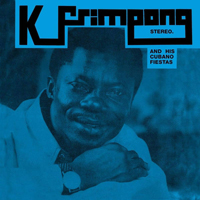 |
ALHAJI K. FRIMPONG & HIS CUBANO FIESTAS
BLACK AND BLUE ALBUMS (Soundway SNDWCD180)
Singer/songwriter Alhaji K. Frimpong (1939-2005) was one of the stalwarts of the Ghanaian highlife scene with his first two albums. The band's name, Cubano Fiestas, in no way reflects their sound! His Blue album from 1976 is a masterpiece of the genre, the uncredited sax is top notch, as are the rest of the band. Anthony and Isaac Yeboah sing chorus. A year later he issued the so-called Black album; the sound has undergone a slight change with the introduction of a synthesizer, which is so dominant that it ruins it. It's a shame, after the perfection of the Blue album. Pianos wont keep their tune in the tropical atmosphere, but there were plenty of good solid state organs such as the compact Farfisa that is heard here with restraint. This pair of albums is being made available on vinyl once again (formerly on Secret Stash, before that on Continental Records, 2011), and you can buy all of the tracks from both albums as a download, which is how I have it. Decades ago you could find albums like this on CD in African markets in most big Western cities. You couldn't tell real releases from bootlegs because usually they had a cheaply printed color cover and no liner notes. However, the crucial information can be found on Discogs which lists the personnel, including Kofi Abrokwah on alto sax, Slim Manu on bass, Yaw Asante on drums, Dan Asare on percussion, Jacob Osae on lead guitar, Sammy Cropper on rhythm (yes, that moniker is a nod to Steve Cropper of the MGs), George Amissa on sax, Arthur Kennedy on trumpet, and Frimpong himself as singer. Backing vocals are again by Anthony and Isaac Yeboah. No one admits to touching the synthesizer. Some of the musicians were also in Starlite Band, Vis-a-Vis and later backed Alex Konadu. So this pair of classic albums last appeared on CD (issued by Regency Music in 1997) with the title "Kyenkyen Bi Adi Manu" which is the lead-off song. My version has overdubbed wanky synth which ruins it, so it is truly refreshing to hear it again as it was meant to sound, with the "organic" instruments, but to my ears there is no redeeming the Black album with the synth destroying every cut. The Blue album (Ofo Bros 1976) had 8 tracks and the Black album, which followed a year later, four tracks: all 12 are included here by Soundway. |
|
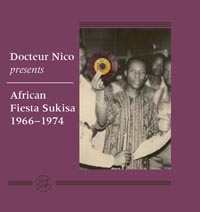
DOCTEUR NICO PRESENTS AFRICAN FIESTA SUKISA 1966-74 (Planet Ilunga PI-14)
In 2009 when I published a Discography of Docteur Nico, I did not include more than a sketch of his life, but I had ambitions to write a full-scale biography at the time. However, my plans to go back to Congo-Zaire were thwarted. I have a Congolese friend who now lives in California who planned to go visit his mother (and "the bush under which he was born") but civil war intervened. On another occasion a conference was planned in Kinshasa, to which I was invited, to discuss Nico's work — that fell apart however. Now with this compilation from Planet Ilunga, and its massive booklet we get many views of his life and work from those who knew him: his brother and daughter, former bandmates and friends, as well as a never-before published interview with him. Born in Kasaï, Nico had a tough childhood. His father, François Kabamba, who played accordéon, died, and the in-laws wanted his mother to remarry her brother-in-law. Rather than accept this fate the mother fled, leaving Nico essentially an orphan. His elder brother Déchaud brought him to Kinshasa to live with two aunties who housed and raised the boy. Déchaud was a back-up singer to the great Paul Mwanga, and soon young Nico was hanging out at the Opika studio and learning to play guitar. He did not read music but learned by ear and quickly impressed the musicians at the studios. From 1951 to '57 he appeared as a backup singer on discs by le groupe DePe, featuring Déchaud and Gobi. On the ballad "Cherie Henriette," (Opika 1326) the credits are Kabasele et Nico et leur ensemble. Nico was barely in his teens and a full-time student. He studied diligently but found time to listen to and practice music. At the Opika studio, the Belgian Fud Candrix played sax and taught jazz phrasing to the other musicians, Taumani was on bass, and guitars were played by Déchaud and cousin Tino Baroza. Soon Nico was gigging as a guitarist also. He can be heard on Planet Ilunga LP04 where he accompanies Kabasele on "African Jazz," the song that gave birth to the new band. In 1956 the label ended but most of the musicians moved to the new Esengo label with stars also coming from Editions Loningisa. Nico experimented, creating new bands like African Rock & African Jazz Nico. He continued to compose and perform with Kabasele in African Jazz until he & Rochereau split to form African Fiesta.
This new band adapted lots of Cuban tunes, popular on 78s on the Gramophone and Victor label (known by the catalog numbers GV, sold by HMV), and Nico also brought some of his own folklore such as the Mutuashi dance to the repertoire, as these influences were combined into Rumba Lingala. From May 1963 through 1965, African Fiesta was one of the top bands in Kinshasa, releasing some 134 two-sided singles. But Nico discovered that Roger Izeidi, the band's manager, had made a deal to reissue 45s on ASL in Nairobi without consulting him. Nico fired him and told Rochereau he would be dealt with also. Rochereau quit and formed a new band, African Fiesta National to continue the sound (with a couple of guitarists mimicking Nico). Nico and his brother formed a new group African Fiesta Sukisa and this is where his creativity blossomed. This was the height of Nico's career: the Cuban covers now evolved into a full absorption of the son montuno sound into the framework of rumba lingala. The piano part and even the violin charanga part were transposed to the guitar. Trumpets were joined by flute and saxophone, played by Michel Ngoualali who left the Bantous to team up with Nico. Pierre Bazeta "Delafrance" (a veteran of the Ngoma studio pool of musicians and member of Beguen Band) joined on mi-solo guitar. With Rochereau gone, Nico relied on Valentin Sangana, Paul Mizélé, Dominique Dionga "Apôtre," Kwamy Munsi, and an exciting young singer, Etienne "Chantal" Kazadi whose vocal range reminded Nico of his old boss, Kabasele, and who also came from the Kasaï province.
This 3-LP compilation, beautifully restored from rare 45s, chronicles the height of this magnificent band. As a testament to the rarity of the material, many of the songs were not even known to the discographer (me) before now. For many fans, this will be like finding out the Beatles recorded another album between Rubber Soul and Revolver. Or, insert your favorite band name here. For me it is definitely African Fiesta Sukisa, so you can imagine I am overjoyed. It starts with pure jazz on "Mobali Nakobala (the young man of my dreams)," then breaks into pealing guitar before a quick fade. Up next is one of my all-time favorites "Nalingi yo na Motema," in a different, longer version from Ngoma than the single that appeared on Sonodisc CD 36516. In my research I noticed that when Ngoma reissued Sukisa tracks they quite often had the band rerecord them, so there are noticeable differences. The two versions of "Nalingi yo na motema" have different guitar solos of course. The first was recorded in 1968, the second (collected here) in 1969. The singer is Chantal, my absolute first choice from Nico's line-up. (I used a photo of him from Lonoh's book in my discography but was not actually sure it was really him; his biography surprisingly did not provide better images, but now we have a clear shot of him in this new compilation.)
While there were very few unremarkable tunes in the Sukisa catalogue (like Bovic's garage band covers), the Sonodisc compilations were thrown together with no thought to sequencing or presentation (I ripped them all to wav files and put them in chronological order). This LP set brings together 30 tunes, and the download adds a few more. One or two may be familiar but they are all exceptional. "Mokili makambo (The world and its problems)," sung by Valentin Sangana, is another masterpiece. It was voted Song of the Year in 1969. It's a kiri kiri (a dance invented by the band) and has a wicked turn-around in the bridge. The back-beat turns the rhythm on its head: this too is provided in an extended version. This release was part of new material and a new line-up launched in May 1969. "Ata Osali" (a.k.a. "La Jolie Bébé"), also in an extended mix from an Ngoma 45, pits Chantal's vocals against plaintiff soprano sax. Translations are given in French and English of all the original lyrics.
It's not until side B you hear a familiar tune, and that is another hit, "Bougie ya motema (The candle that lights my heart)," which not surprisingly features incandescent guitar from le Docteur. He plays a choppy "dry" solo by damping the strings suggesting, perhaps, a balafon. Up next is the lovely "Okosambuisa ngai (You humiliate me)," also known as "Jeanine," sung by Paul Mizélé who is one of the people who shares reminiscences of the band in the detailed liner notes. "Okosuka wapi (what will be your end)?" introduces the Kono dance, with Lessa Lassan and Josky Kiambukuta as vocalists, again with a wicked backbeat to it, and also a fine soprano sax solo, played by Michel Ngoualali. Nico dances around the melody, but then gets into serious needlework, embroidering the tune on the galloping "Kamungaziko (No hard feelings)" performed by Lessa Lassan, with a trumpet solo over the Kono rhythm. Lassan's kiri kiri "Baoulé" has never been reissued in any form, which is amazing as it is proof that almost everything this band did was exceptional. In fact if you look at the doctored cover photo, there is Nico holding up a copy of this very single.
After Chantal's departure and tragic death, Nico invited Julie Kabwiza into the band and here she sings a "madre rumba," a musical style hard to characterize as it combines elements of kiri kiri and rumba, it is another lost gem which also mystified the discographer. Side E is an entire set of the great Cuban adaptations of the band, cha-chas, pachangas and descargas, adapted from Johnny Pacheco, Arsenio Rodriguez, Conjunto Casino and other rootsy Cuban bands of the 50s and 60s which would have been familiar to the Sukisa crew from GV 78s and early Fania LPs. This side ends with the spiraling, vertiginous "Para Bailar," containing one of Nico's most brilliant compressed solos.
There is still a whole side left, to showcase the folkloric side of the band which brought massive criticism onto Nico's head at the time (1972). "Exhibition show" includes traditional Luba balafons, showing the roots of the mutuashi sound as Nico solos over the top, throwing some very blue notes into the mix. Again, I had never heard this stunning track before. We also hear both sides of a mini opera, featuring some Lomongo folk music from an obscure single that was spurned by the fans at the time.
Everyone knows that Nico was called "the God of the Guitar" by the fans (long before Clapton was given the sobriquet). While this is hyperbole, this set displays Nico's brilliance anew. Nico's children collaborated on the production: his daughter Titi loaned the family photo album which has been reproduced, presenting a window to Nico's domestic and public life: house parties, hanging out with friends, and as a father. Despite the long-held notion that African Fiesta and OK Jazz were rivals, there is a shot of Nico and his wife as best man and bridesmaid at the wedding of Lutumba Simaro, the main composer for OK Jazz after Franco. Above all we see Nico as a devoted family man, plus there are of course many candid shots of him in concert. Finally there is a huge crowd of mourners for Nico's funeral, and a farewell concert from OK Jazz.
Having played this set scores of times while working on the compilation, I have to say Bart Cattaert did a great job of sequencing the music and creating an immersive mood that puts you firmly in the land of Sukisa for a very dreamy couple of hours. |